

The simplest way to limit TV until homework is done is to agree one clear rule with your child ("TV comes on after homework"), keep it the same every school night, and make it easy to keep. That last part matters most. If you have to stand over the TV, the rule turns into nagging. If the TV is simply off until you say so, it does not.
This guide covers why the rule is worth having, a routine that works for most families, and how to lock the TV from your phone during homework time.
Why "TV after homework" is worth it
Nobody needs to be told that a TV is more fun than long division. What the research adds is a more precise picture of what goes wrong.
- Homework gets squeezed out. An Iowa State study (2017) followed children for one to two years. It found that media in the bedroom was linked to more total screen time, and that was linked to worse school performance. The researchers' point was that the TV is not a villain in itself. It replaces things like reading, sleep and homework.
- Split attention. About a third of 8 to 18 year olds admit to watching TV or texting during homework. Studies link media multitasking while learning to lower recall and grades. Most of this evidence is correlational, which means it shows a link, not proof that the TV caused the lower marks.
- An older finding. A 2005 study found children with a bedroom TV scored consistently lower in maths, reading and language.
The balanced reading is that TV is fine, but it works best as the reward at the end of the evening, not the competition during it. The Royal College of Paediatrics and Child Health makes a similar point: the harm comes less from screens themselves than from what they push out, such as sleep, exercise and family time.
A routine that makes the rule stick
You do not need a complicated system. These steps tend to work:
- Agree the rule together, at a calm time. Not in the middle of a row. Children keep rules better when they helped make them.
- Set a start time for homework. For example, shortly after getting home and a snack.
- Put the finish in your child's hands. "TV when the homework is done" gives them something to aim for. It beats "TV at 6pm", which can mean rushing.
- Check the work, briefly. A quick look keeps the rule honest.
- Have a clear end time for the evening. Homework first, then TV, then wind-down. See our guide to stopping kids watching TV at night.
- Keep it the same every school night. Consistency is what makes it feel normal, rather than a decision you have to defend each day.
- Be a bit flexible at weekends. Many families relax the rule on Fridays and in the holidays.
A few things help it feel fair. Use a short, friendly message rather than a lecture. Give a small amount of notice before TV time starts or ends. Let your child pick what they watch once it is on.
What about the TV on in the background?
Some children say they work better with the TV on. The research above suggests that divided attention is linked to lower recall and grades, so quiet tends to be better for tasks that need real thinking, such as essays, maths and revision. You could compromise: music without lyrics, or the TV off for the hard task and allowed for the easy one. It is your call, and every child is different.
Why rules fail, and what to do
Rules usually fail for one of three reasons:
- Nobody enforces them. The TV is on, you are busy, and it is easier to let it slide.
- The parent becomes the bad guy. Every reminder feels like a telling-off.
- The rule is unclear. "Not too much" means different things to different people.
A lock you control from your phone helps with the first two. The TV is already off-limits, so there is no argument about switching it off. And for the third, a written message on the screen makes the rule plain.
How TV Parent helps
TV Parent is an Android app for LG smart TVs, coming soon to Google Play. Your phone and the TV need to be on the same home Wi-Fi. Here is what it does for homework time:
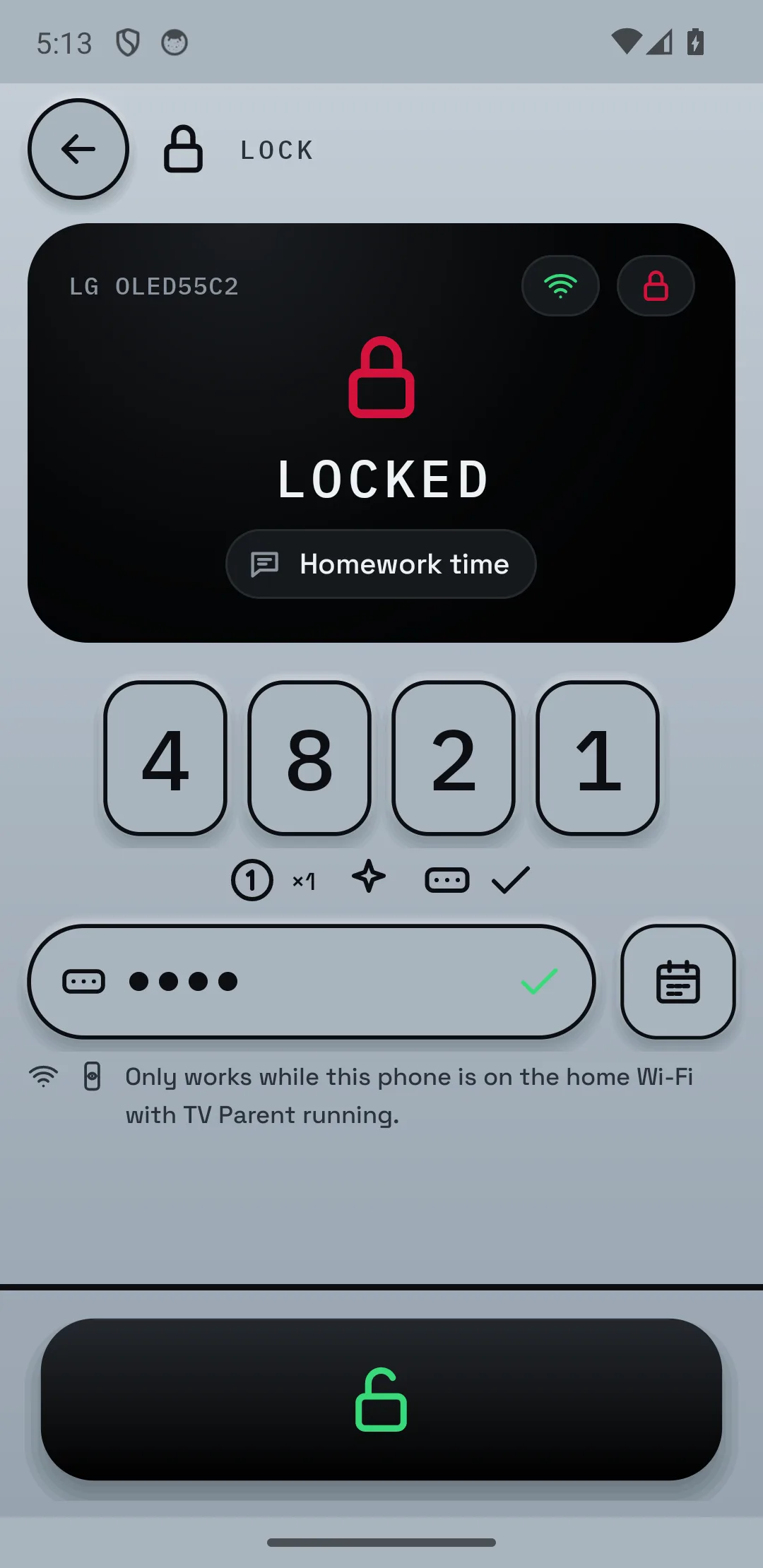
- Lock the TV with a "Homework time" message. The screen shows your message and the TV can't be used until you unlock it with your PIN.
- Unlock it from your phone as soon as the work is done. That makes the finish feel like a reward.
- Set a school-night schedule, so the lock can come on at the same time each evening without you having to remember.
- Send a short message to the TV, such as "Ten minutes to go".
Locking and unlocking are on the free plan. Pro (£9.99, paid once) adds extras such as one-time PINs and a lock that returns after the TV is switched on. Plus is £2.99 a month or £24.99 a year, and there are 7 days of Plus free to try. See the pricing.
To be clear about the limits: it works with LG webOS TVs only, it can't lock a phone, tablet or laptop, and any messages are typed and sent by you.
Common questions
How do I limit TV until homework is done?
Agree a simple rule that homework comes first, keep it the same on every school night, and make it easy to keep. A lock you can switch on and off from your phone, such as TV Parent's, means you do not have to stand guard.
Is it bad to do homework with the TV on?
Studies link media multitasking during learning to lower recall and grades. Most of this evidence is correlational, so it shows a link, not proof of cause. For tasks that need concentration, quiet is generally the safer choice.
What if my child does their homework badly just to get to the TV?
It is common, and a quick check of the work usually deals with it. You can also agree that the work has to be done properly, not just finished. Staying calm and consistent helps more than a bigger punishment.
Should weekends have the same rule?
That is up to you. Many families keep homework first but allow more TV time at weekends. A separate weekend schedule keeps the school-night rule clear.